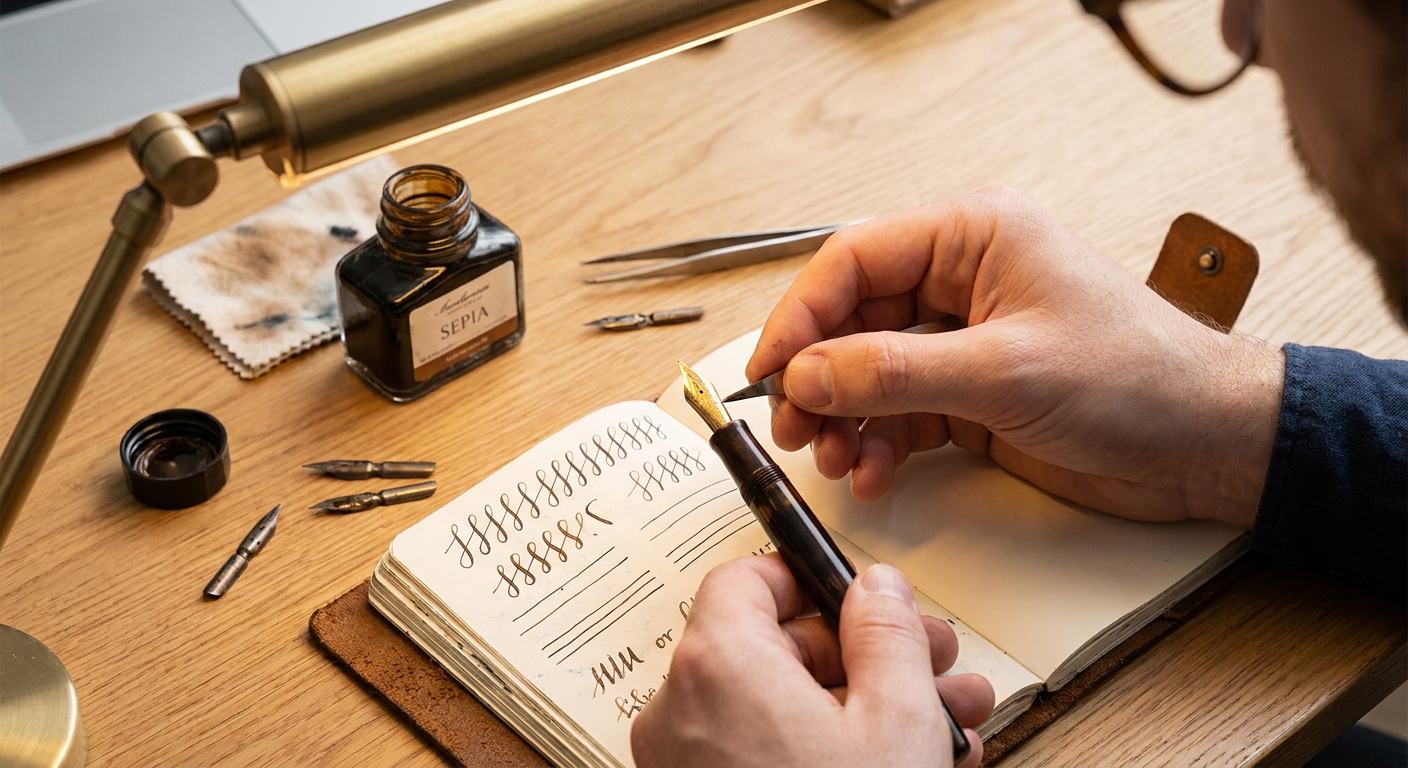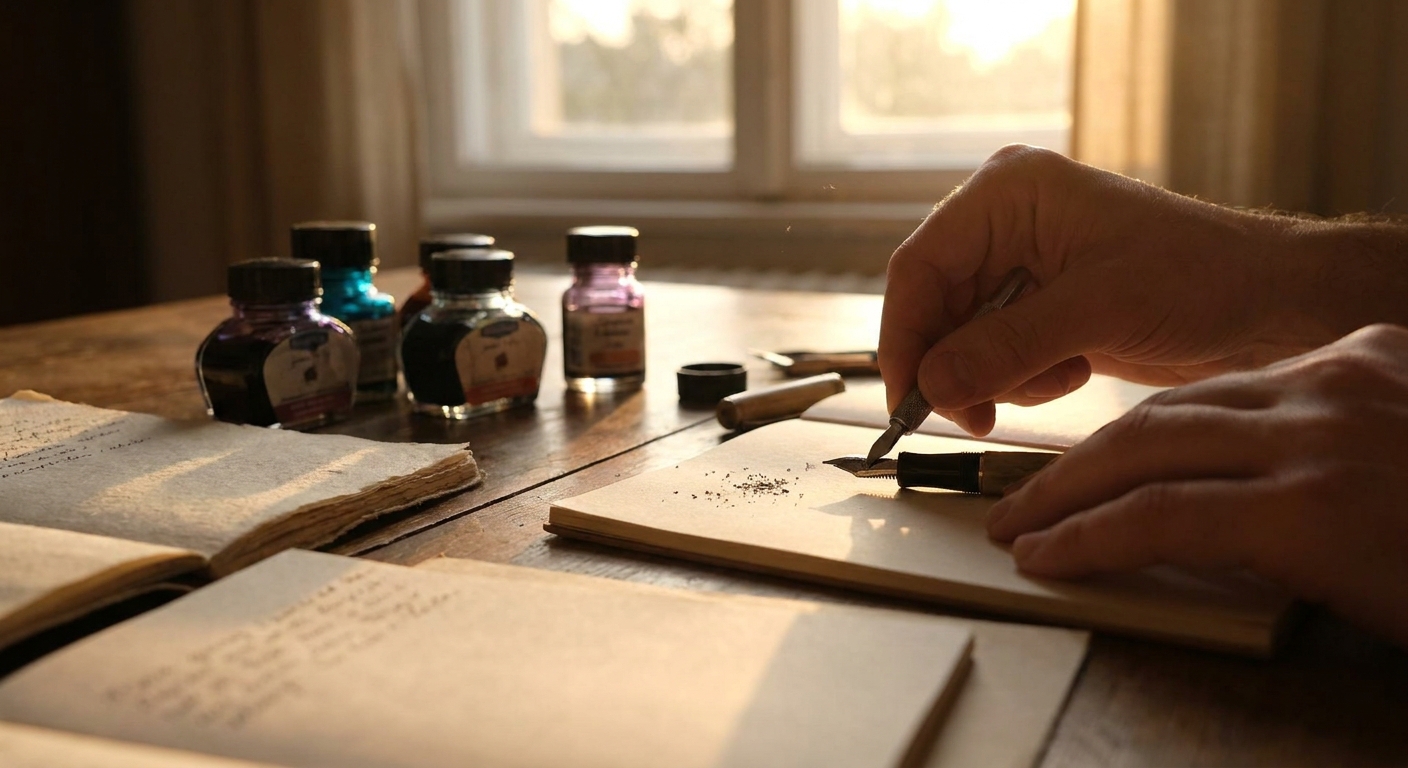
There is a moment—halfway through the first line—when you know a nib is right. The pen settles into the paper’s grain, the ink ribbon is steady, and the nib seems to sing softly under your fingers. That sensation is not an accident; it’s the result of thoughtful nib design, compatible ink and paper, and, often, a bit of careful tuning.
The Quiet Magic of a Properly Tuned Nib
This guide explores how to coax that magic from your fountain pens: understanding nib characteristics, balancing ink and paper, and performing gentle, responsible tuning that respects the soul of the writing instrument.
Understanding Nib Personalities
Before you can tune a nib, you must understand what it wants to be. Each nib is a small sculpture of metal with its own temperament.
Shape and Grind
- Round (standard) nibs – Found on most modern pens, these give predictable, uniform lines whether you write vertically or with a slant. Ideal for everyday notes and journaling.
- Italic and stub nibs – With a flattened tip, they produce broad vertical strokes and fine horizontal lines, adding character to handwriting. Perfect for headings, quotes, and slow, deliberate writing.
- Architect grinds – The reverse of a stub: thin verticals, broad horizontals. Loved by some for block printing and certain Asian scripts.
Each of these shapes can be tuned for smoothness, flow, and feedback—but the core character of the line should be preserved. The goal isn’t to turn a stub into a butter-smooth round: it’s to help the nib be the best version of itself.
Tipping & Flex
- Hard steel nibs – Consistent and forgiving. They’re wonderful candidates for learning the basics of nib tuning.
- Gold nibs (14k, 18k) – Often offer more spring and subtler feedback. Tuning must be gentler; these metals are easier to over‑bend.
- Flex and soft nibs – Capable of line variation with pressure. Extra care is needed here; alignment and flow must be perfect to avoid railroading (two pale lines) or nib damage.
A good tune respects the nib’s material limits: you’re refining the writing experience, not rewriting physics.
Ink Flow: The Heartbeat of the Pen
Ink is the blood of the system, and flow is its pulse. Tuning without thinking about ink is like tuning a piano without considering the room’s humidity.
Wet vs Dry Inks
- Wet inks feel lush and saturated. They can make a fine nib feel broader and smoother but may feather on lower‑quality paper.
- Dry inks are controlled and crisp. They’re ideal for detailed notes and small handwriting, but in a stingy pen they can feel starved.
If a pen feels scratchy, the culprit isn’t always the nib. Sometimes switching from a very dry ink to a slightly wetter one (e.g., from an iron‑gall blue‑black to a lubricated modern blue) is enough to transform the experience.
Sheen, Shading, and Tuning
- Sheening inks (that metallic halo on dark pools of ink) love broad or wet nibs and coated papers. However, excessive wetness can smear or cause slow dry times.
- Shading inks reveal their gradient best with moderate flow: too wet and shading becomes a flat patch of color; too dry and the line looks anemic.
When tuning flow, think about the ink you intend to use most. A dedicated pen for high‑sheen inks can be tuned a touch wetter; a daily notebook pen might stay moderate for legibility and quick dry times.
Paper: The Third Partner in the Trio
The best nib and most beautiful ink can be ruined by the wrong paper.
- Coated, premium papers (e.g., Tomoe River, Cosmo Air Light) – Showcase sheen and shading, but inks take longer to dry. A very wet tune may be delightful but impractical for left‑handers or fast note‑takers.
- Mid‑range journal paper (Leuchtturm, Rhodia, Midori) – Good balance of performance and practicality. Most nibs can be tuned to a moderate wetness here.
- Office copy paper or planner paper – Often absorbent and prone to feathering. Here, a slightly drier nib and a well‑behaved ink protect you from show‑through and blotchy lines.
Whenever a pen misbehaves, test it on good paper first. Many "problem" nibs turn out to be perfectly tuned but poorly matched with rough or thirsty paper.
Gentle Tuning: What You Can (and Should) Do at Home
You don’t need a bench of specialized tools to make meaningful improvements. A small kit and a careful hand can go a long way.
Basic Toolkit
- A strong loupe (10× magnification)
- Brass shims (0.001" or thinner) for cleaning and micro‑adjustments
- A few sheets of mylar or micro‑mesh in very fine grits (8,000–12,000)
- Clean, smooth paper towels and a reliable, well‑behaved ink
1. Checking Alignment
Misaligned tines are the single most common cause of scratchy writing.
- Under a loupe, look at the nib head‑on.
- The tips of both tines should meet evenly, like clasped hands.
- If one tine is higher, very gently nudge it down with your fingernail or a thumbnail’s side, testing between each micro‑adjustment.
Alignment alone often transforms a pen from scratchy to silky.
2. Clearing and Adjusting Flow
If flow is inconsistent or hard‑starting:
- Flush the pen with water (and a drop of pen‑flush if needed).
- Once clean, insert a brass shim gently between the tines from the breather hole toward the tip, drawing it out slowly.
- Repeat once or twice only. This clears micro‑debris and can slightly open the slit, increasing flow.
If your pen was already very wet, skip step 3 and focus on cleaning alone.
3. Polishing for Smoothness (With Restraint)
Micro‑mesh and mylar are scalpel, not sledgehammer.
- Ink the pen.
- On a dampened strip of mylar, write tiny figure‑eights and light horizontal lines using only your normal writing pressure.
- Test on paper after every few strokes.
Stop the moment the nib feels right. Over‑polishing can remove tipping material or create a flat spot, which may feel smooth in one direction but scratchy in another.
Knowing When to Seek a Nibmeister
Certain jobs are best left to professionals:
- Custom grinds (stub, architect, cursive italic)
- Repairing sprung or cracked nibs
- Precision flow tuning on vintage, flex, or rare pens
Professional nib work isn’t just repair; it’s a bespoke tailoring service for your handwriting. Rather than gambling with an irreplaceable nib, budget for professional tuning on cherished pens.
Maintenance Rituals for Long‑Term Harmony
Regular care is the quiet companion to tuning.
- Monthly flushing for regularly used pens (more often for heavily saturated or shimmering inks).
- Avoid ink crust around the nib by wiping with a soft cloth after long sessions.
- Rotate inks thoughtfully—alternate highly saturated sheening inks with simpler, gentler inks to reduce staining and clogging.
These small rituals keep tuning stable: a well‑rinsed feed responds predictably to any adjustment.
Buying Wisely: Tuning Across Budgets
Thoughtful purchasing makes tuning satisfying rather than stressful.
Entry Level (Under $50)
Look for:
- Reliable steel nibs from reputable makers
- Easily replaceable nib units
- Cartridges/converters for ink flexibility
At this level, you can safely learn basic tuning. If a nib goes wrong, replacement is affordable and often user‑swappable.
Mid‑Range ($50–$200)
Here you’ll encounter:
- Higher consistency in QC
- Gold nib options and more interesting grinds
- Better feeds, often ebonite on certain models
These pens are ideal candidates for either your own light tuning or a nibmeister’s refinement. Many enthusiasts send a new mid‑range pen directly for professional setup.
Premium and Heirloom ($200+)
This is where caution is paramount.
- Let the pen reveal its character first; ink it, use it on several papers.
- If anything feels off, resist the urge to polish; instead, document the behavior and consult a professional.
A premium nib well‑tuned to your hand can become a lifelong companion—something you’ll reach for decades later and recognize by feel alone.
The Pleasure of a Pen that Truly Fits
Nib tuning is as much listening as it is adjusting. You listen to the whisper of the nib on the page, to the way ink settles in the line, to the feedback in your fingertips. With each gentle tweak—alignment here, a shim pass there—you move closer to that elusive, personal ideal.
There is no single definition of the "perfect" nib. There is only the nib that feels perfectly yours: the one that turns everyday notes into small pleasures, and long letters into quiet, meditative acts. With understanding, care, and patient tuning, that singing point is well within reach.