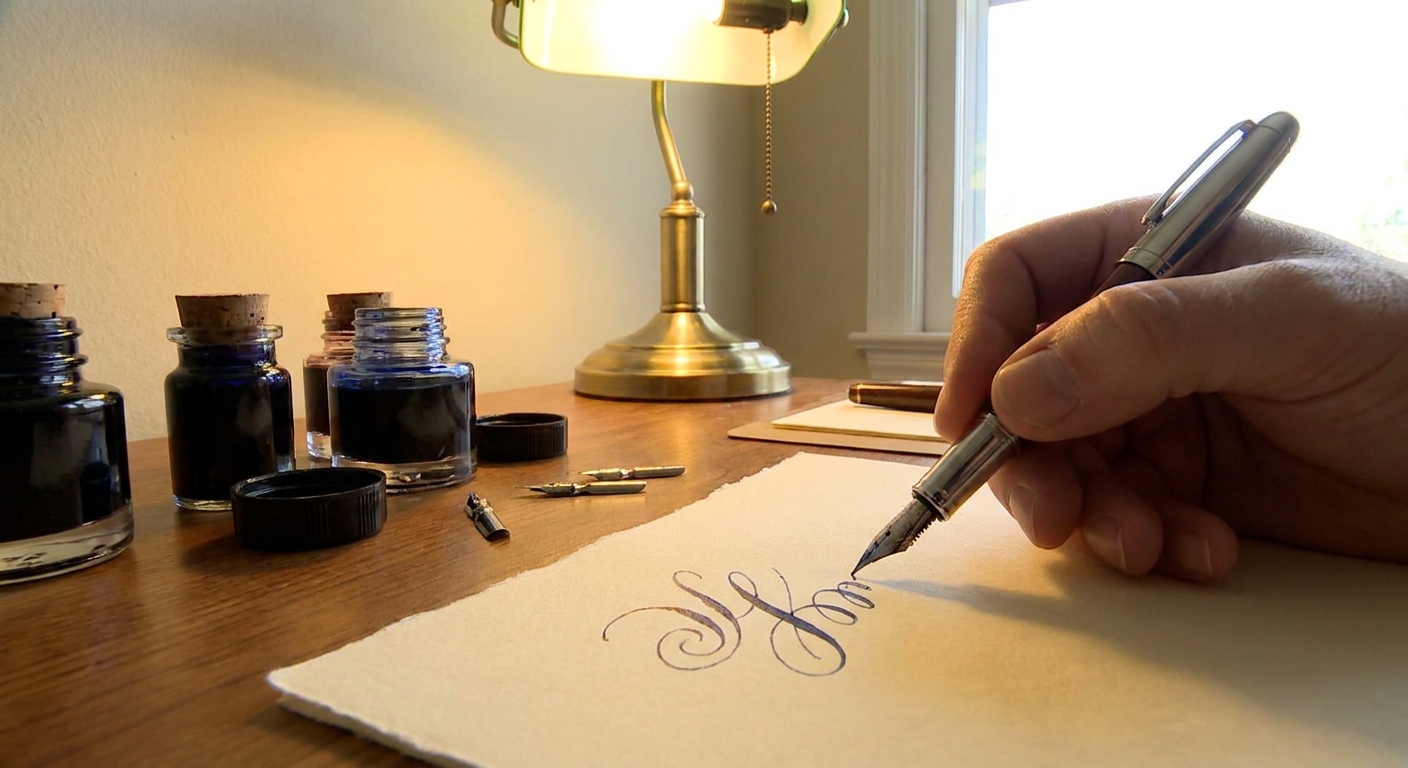
In an age of frictionless screens, a fountain pen introduces just enough resistance to make each word deliberate. The slight feedback of the nib, the scent of ink, the way color pools at the end of a flourish—all of this makes writing feel less like a task and more like a conversation with the page.
Why Fountain Pens Still Matter
This companion piece is part how-to guide, part buyer’s roadmap, designed for stationery lovers who want to deepen both their knowledge and their daily pleasure at the desk.
Step 1: Choose Your First (or Next) Pen with Intention
Before being seduced by shimmering acrylics and gold nibs, start with three simple questions:
Where will you write? At a desk, on a commute, in meeting rooms, outdoors?
How small is your handwriting? Tiny block letters, flowing cursive, or bold print?
What paper do you use most? Premium journals or whatever the office provides?
Your answers shape the ideal starter setup.
Recommended Formats by Use Case
- Office and everyday carry
Look for a rugged clip, snap cap or quick twist, and a fine or medium steel nib. Cartridge/converter filling makes refills simple.
- Journaling and letters at home
You can embrace larger, wetter nibs and more expressive inks. Piston fillers and demonstrators excel for long writing sessions.
- Sketching and marginalia
Consider an extra-fine or fine nib with a drier ink for delicate strokes and minimal bleedthrough.
Step 2: Match Nib Character to Your Handwriting
A nib is not just a size; it is a personality.
Feedback vs. Glassy Smooth
- Feedback-rich nibs (often Japanese fines, some vintage pens) feel a bit like a sharpened pencil—precise, controlled, never truly scratchy when tuned well.
- Glassy-smooth nibs (many modern European mediums and broads) almost float over the paper, prioritizing comfort and generous ink flow.
Decide whether you enjoy a sense of paper texture or prefer effortless glide. Neither is better; they simply suit different writers.
Specialty Nibs Worth Exploring
- Stub (1.1mm, 1.5mm, etc.) – Adds natural line variation to everyday handwriting. Gorgeous for headings, quotes, and titles.
- Soft or semi-flex nibs – Offer subtle line width changes with pressure, excellent for expressive cursive and flourishes.
- Architect / Hebrew grind – Thin downstrokes, broad cross-strokes. Beautiful for block printing and italic caps.
If you’re buying your first specialty nib, start with a modest steel stub—it’s affordable, easy to control, and dramatically changes the character of your writing.
Step 3: Choosing Ink—Behavior Before Color
Ink colors are infinite; your time and patience are not. Focus first on how ink behaves, then on hue.
Core Ink Properties
- Flow – How readily ink moves through the feed. Balanced flow avoids both starvation and blobbing.
- Saturation – Deepness of color. Highly saturated inks can offer drama but may take longer to dry.
- Dry time – Important for left-handers and quick note-takers.
- Water resistance – Valuable for signatures, addressing envelopes, or archival notes.
Sheen, Shading, and Shimmer—When to Use Them
- Use shading inks in broader or stub nibs on good paper to see gradient tones within a single stroke.
- Use sheening inks when you write more slowly or for decorative pieces; they shine on coated papers like Tomoe River or Clairefontaine.
- Reserve shimmer inks for pens you’re willing to clean more often. They are beautiful in large nibs but can clog finer feeds over time.
A sensible starter palette might include:
- Workhorse blue-black – For meetings, forms, anything official.
- Expressive teal or burgundy – For journaling and letters.
- One adventurous ink – A shader or sheener to enjoy on special paper.
Step 4: Paper That Respects Your Pen
The right paper doesn’t simply prevent feathering; it magnifies the pleasure of every stroke.
Everyday Compatibility
If you’re constrained to ordinary office paper:
- Prefer fine or extra-fine nibs to limit ink spread.
- Choose drier, well-behaved inks with fast dry times.
- Test the back of a sheet before committing to long notes or double-sided printing.
When You Can Choose Your Own Paper
Invest in at least one dedicated fountain pen notebook. Options include:
- Rhodia / Clairefontaine – Excellent all-rounders for both fine and broad nibs, with crisp lines and reliable sheen.
- Tomoe River – For ink experiments, swatching, and letter-writing where you want every nuance of sheen and shading.
- Midori MD, Apica, or similar – For a slightly more tactile feel without sacrificing performance.
Pair broad nibs and complex inks with these papers, and reserve cheaper stock for utilitarian lists and quick jottings.
Step 5: Filling Systems and Practicalities
Different filling mechanisms suit different habits.
- Cartridge/Converter (C/C) – Flexible and easy to clean. Ideal for beginners and frequent ink changers.
- Piston fillers – Larger ink capacity, visible ink windows on many models, delightful to operate. Slightly more involved to clean.
- Vacuum fillers and eyedroppers – Huge capacity for heavy writers and journallers; best for those comfortable with maintenance.
If you enjoy sampling many inks, C/C pens are your best companions. If you write pages every day in one or two favorite inks, a piston or vacuum filler can feel like a small luxury.
Step 6: Essential Maintenance Rituals
Maintaining fountain pens can be as soothing as using them.
Core Routine
- Weekly – For daily writers, check caps and seals, wipe off any condensation or ink mist.
- Monthly – Flush pens that have been continuously inked. Rotate colors or at least top up with fresh ink.
- Seasonally – For pens in storage, empty and clean them fully. Store horizontally or nib-up in a temperate, dry environment.
Gentle Tuning at Home
A few simple practices enhance performance:
- If a pen skips or hard-starts, first suspect dried ink. Flush with cool water; consider a slightly wetter ink.
- If a nib feels overly sharp, a professional smoothing is safer than DIY, but very light figure-eight motions on a specialized nib smoothing pad can help experienced users.
- For persistently troublesome flow, consult a technician or nib specialist rather than forcing adjustments. A tuned nib can turn an unloved pen into a favorite.
Thoughtful Buying Across Budgets
How to expand a collection without losing the plot.
Budget Tier: Under $40 – Reliable Foundations
Goal: Learn what you like.
Look for:
- One or two robust C/C pens.
- Different nib widths (e.g., fine and stub) on easily swappable nib units.
- A bottle of dependable ink and a small stack of ink samples.
At this level, you’re mapping your preferences: Do you actually enjoy ultra-smooth nibs? Are you drawn to dusky blues or bright greens? Let experience guide your next step.
Mid-Tier: $40–$150 – Discovering Your Taste
Goal: Move toward pens that feel distinctly you.
- Experiment with different sections and grips—triangular, tapered, flared.
- Try at least one piston filler and one gold nib (if possible on the secondary market) to understand how they differ from steel.
- Invest in one truly excellent notebook dedicated to your best pen and ink combinations.
At this point, it’s wise to buy fewer, better pens rather than chasing every new color variant.
High-End: $150 and Beyond – Intentional Indulgence
Goal: Acquire lifetime pens, not trophies.
- Ask: Will I actually write with this weekly? If not, reconsider.
- Consider custom nib work—an architect grind or soft cursive italic that transforms your handwriting.
- Explore makers who emphasize craftsmanship: hand-turned bodies, urushi, ebonite, or heritage designs with modern feeds.
A “forever pen” is one that feels inevitable in your hand—balanced, reliable, and perfectly in tune with your script.
Building a Cohesive, Useable Collection
Instead of collecting for the shelf, collect for the page. One practical framework:
The Everyday Trio
- Fine nib with conservative ink for forms and notes. - Medium nib with a characterful ink for journaling. - Stub or broad nib for headings, cards, and celebratory writing.
The Experiment Box
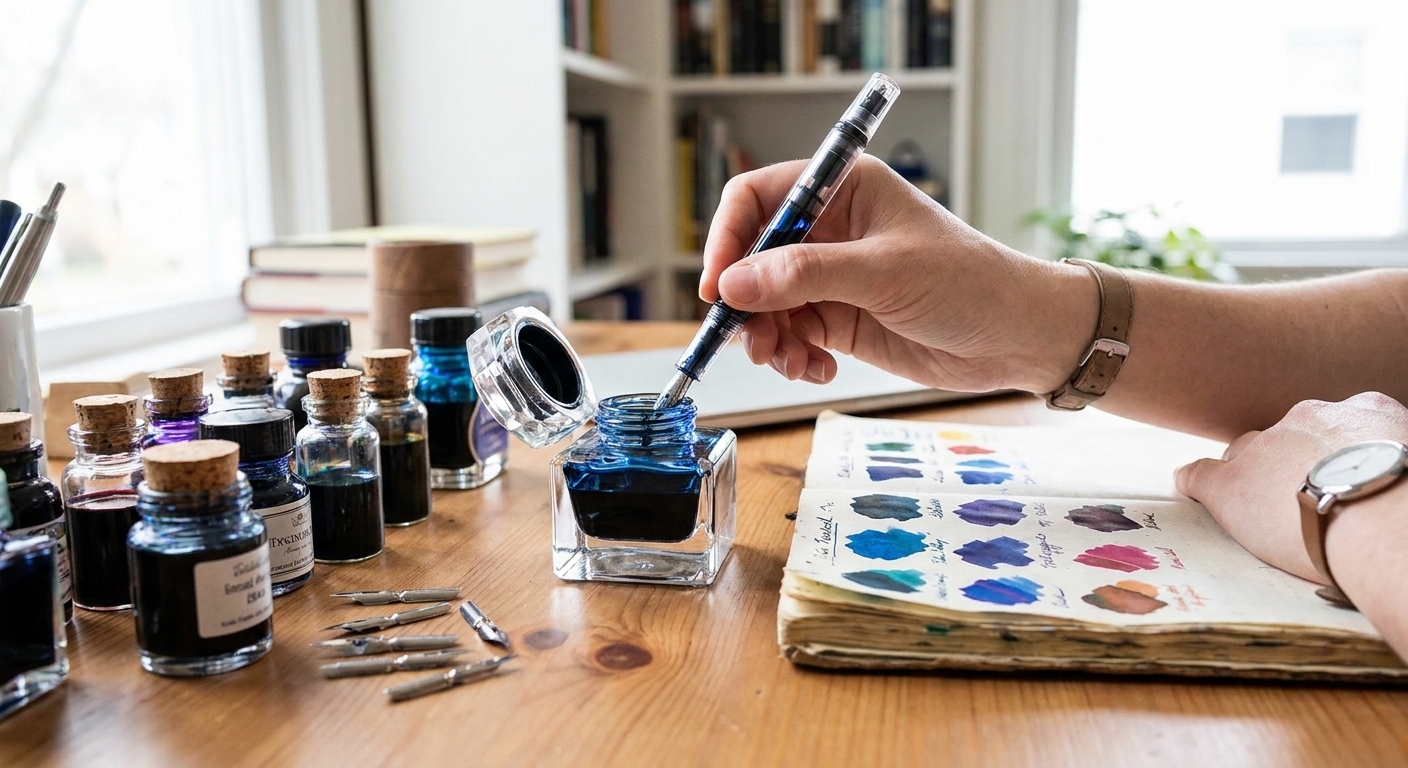
- A few inexpensive pens (or dip pens) reserved for new and wild inks. - Swatch cards or a dedicated ink journal to record behavior: dry time, sheen, shading, and water resistance.
The Anchor Pen
- One higher-end pen, tuned exactly to your liking, that you reach for when something matters: letters, signatures, or private reflections.
With this structure, every pen has a purpose, and every new purchase must earn its place.
The Last Line: Make It a Habit
The true value of a fountain pen is not in its material but in the pages it fills. Set small, repeatable rituals:
- A paragraph each morning in your journal with a favorite broad nib and shimmering ink.
- End-of-week reflections written slowly on Tomoe River with a shading sepia.
- Letters to yourself, sealed and dated, written with your most meaningful pen.
Tuned nibs, well-chosen inks, and compatible paper come together to create a writing experience that is deeply tactile and quietly luxurious. Over time, your pens will become repositories of memory, each stain in the feed a trace of things you once needed to say.
Fill a pen. Choose a page. Let the ink decide the pace.